



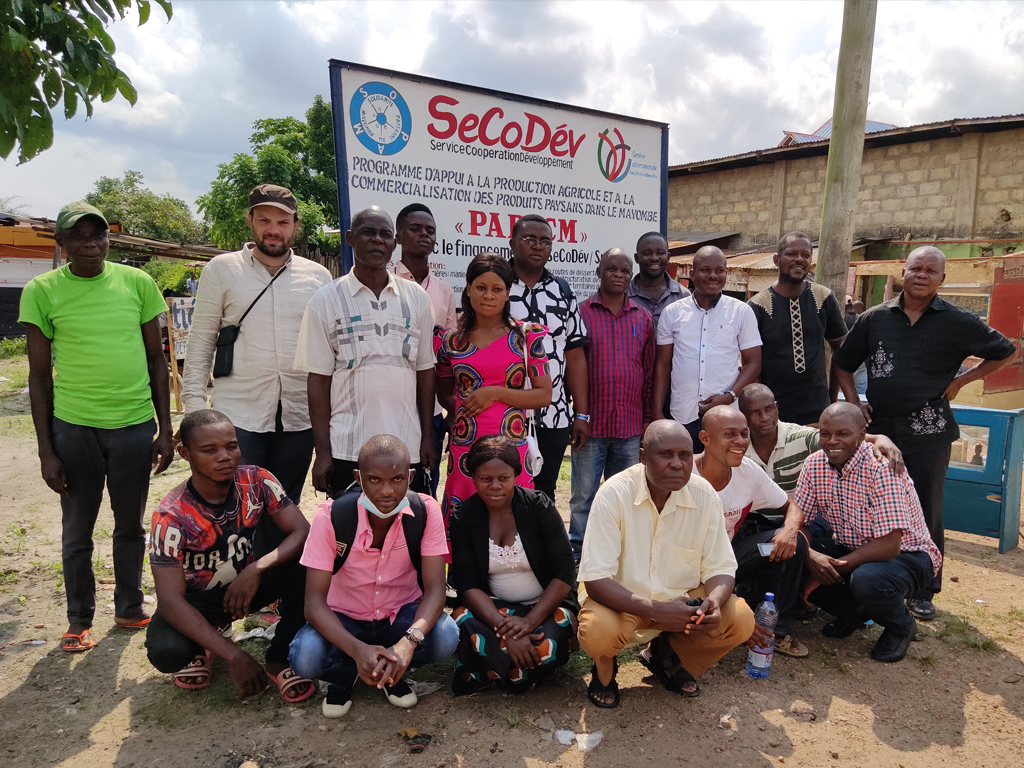
In Bibokoboko, in the Democratic Republic of the Congo, around a thousand survivors of violence against women and girls are receiving holistic medical and psychological care from teams of female health workers, psychologists and community support workers in a safe space that promotes physical and emotional healing. Beyond care, their gradual involvement in income-generating activities strengthens their social recognition and their decision-making power within the community. This support reflects a core conviction at SECODEV: gender equality is not simply a matter of representation; it also means helping the most vulnerable women to rebuild their lives and become self-reliant.
For SECODEV, gender equality is not simply a box to be ticked, but a principle put into practice at every stage of its projects, from identifying needs to evaluating results. Every activity is designed to remove the specific obstacles women and girls face, whether in accessing training, income-generating opportunities or decision-making bodies. Women’s economic empowerment, through training, employment and support to start their own businesses, lies at the heart of this approach.
To achieve this, SECODEV draws on several approaches. One of these, known as the family harmony approach, was developed in Rwanda and subsequently extended to other countries. It works within households themselves, where inequalities are reproduced and where domestic violence often originates. By involving both women and men, with a focus on positive masculinity, it encourages open and constructive dialogue within families and communities and helps foster more balanced and respectful relationships.
This effort is reinforced by psychosocial support, which responds to people’s emotional and social needs in fragile contexts. By offering attentive listening and appropriate support, it helps to ease tensions and is often, for the most vulnerable women, a prerequisite for any form of lasting empowerment.
Women and girls make up half of the world’s population and half of its development potential. However, gender inequalities persist in most developing countries and hold back social progress. Rural women play a key role in their households. They contribute to agricultural work and rural businesses and help sustain local and global economies.
Across its programmes, SECODEV is committed to promoting gender equality and women’s rights and to highlighting the crucial role women play in all the countries where it works. Together with its partners, the organisation carries out a range of activities to this end. At the same time, it remains attentive to local realities and sensitivities surrounding gender relations, supporting constructive approaches that do not exclude men and are adapted to the sociocultural context.