



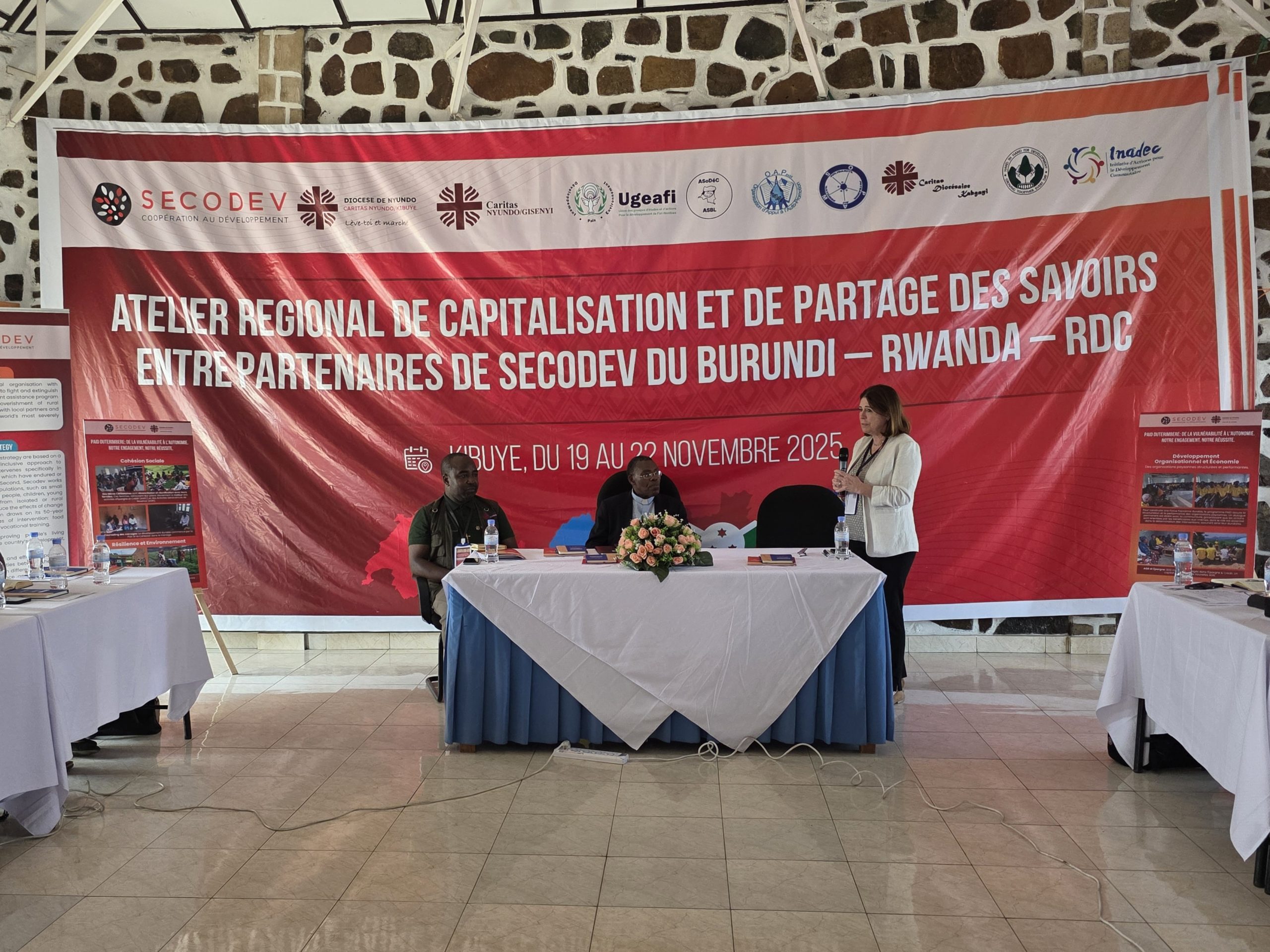
From 19 to 22 November 2025, Secodev organised its biennial knowledge-sharing workshop in Kibuye, Rwanda, bringing together nine African partner organisations. Focusing on mental health and the empowerment of farming families, these three days of discussions were rich and stimulating, opening up new avenues for reflection and collaboration.
Mental health and psychosocial approaches at the heart of the discussions
Secodev’s areas of intervention cover diverse contexts, including regions experiencing chronic, sometimes prolonged conflicts, as well as territories where, in the absence of conflict, persistent poverty has a lasting negative impact on individuals and communities as a whole. These situations foster the emergence of moral and psychological suffering. In order to strengthen the impact of its interventions, Secodev integrates the dimension of mental health into several of its projects.
“Secodev integrates mental health into several of its projects.”
It has been observed that several families and individuals, despite their hard work, struggle to achieve their development goals. These difficulties seem to be closely linked to their psychological well-being, which limits their capacity to make sustainable progress.
Following consultations with various local stakeholders, it became clear that it was essential to work collectively on these issues and to pool skills in order to improve the support provided and increase the effectiveness of the actions undertaken. Within this collaborative manner, partners already integrating psychosocial approaches into their projects mobilised their specialist staff—psychologists and social workers—to share their support methods, their successes but also difficulties encountered in the field. Among the recurring issues observed were disorders related to psychological and social distress.
“Precarious living conditions can cause stress and anxiety.”
Among the 27 participants, the presence of Dr. Carole Dromer, a member of the Secodev committee and a physician with more than 30 years’ experience in humanitarian contexts, was particularly appreciated. Her contributions highlighted the vicious circle between poverty and mental health. She explained that precarious living conditions can cause stress and anxiety, which then have repercussions on daily life: difficulties adapting to change and uncertainty (fear of tomorrow, fear of deprivation), difficulty overcoming disagreements, lack of social support, stigmatisation, as well as a decline in productivity and performance at work, thereby aggravating the economic situation of families.
For some participants, the issue of mental health was a relatively new topic. Ernest Niyonzima, director of a Burundian organisation, testified to an increased awareness of the close links between poverty, psychological well-being and the development of farming families. He now plans to integrate mental health approaches into his projects in order to offer real opportunities to the most vulnerable families.
Field visit
Participants were also able to observe firsthand the changes brought about by the project in Kibuye during a field visit organised around two complementary axes.
“Drawing inspiration from innovations and exchanging around agroecological practices.”
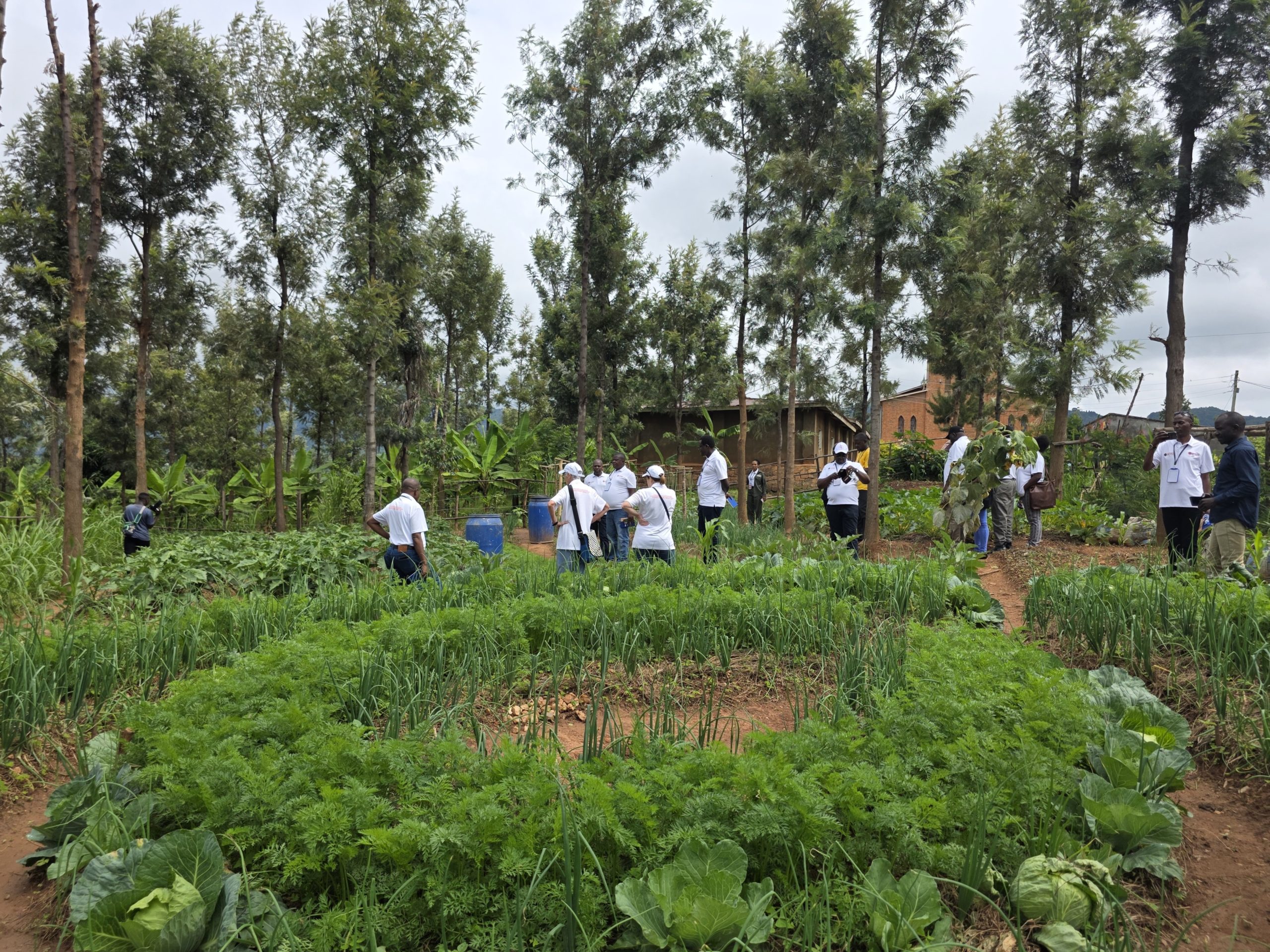
This first axis focused on agroecological practices and small-scale livestock farming implemented within the demonstration farm. Designed to be fully adapted to the local context, this farm serves as a learning site for both farmers participating in the project and external visitors who are interested. It thus helps to disseminate good practices within communities. The site includes vegetable gardens, nurseries, mushroom cultivation, water collection systems and livestock farming, in particular poultry of heritage breeds. The visit offered the agricultural technicians present the opportunity to draw inspiration from the innovations presented and to exchange with their peers around practical approaches, fostering mutual learning.

“Proud of the changes achieved, they mentioned increased incomes and the schooling of their children.”
The second axis highlighted the approach to empowering farming families and its impacts. Project beneficiaries shared their experiences with visitors, illustrating the effects of the support provided by the local partner. Proud of the changes achieved, they mentioned increased incomes, the schooling of their children, improvements in their agricultural practices, the launch of new income-generating activities, as well as the rehabilitation of their housing. Participants observed that this approach adapts to a wide diversity of family situations, whether young families with children or single-parent families.
A strengthened partnership
This workshop helped to consolidate the partnership between Secodev and its local partners, while strengthening South-South exchanges and collaboration within the Secodev network.
We are delighted with the quality of these moments of sharing and the collective dynamic that emerged from them. Secodev will continue to pursue joint actions and the implementation of ideas arising from this meeting, in particular around the integration of mental health and approaches to empowering farming families.