

Gender-based violence (GBV) takes many forms, not only physical. It often stems from an unequal balance of power: when a woman depends entirely on others for food, shelter or the means to provide for her children, that dependence can be used to control her, exploit her or silence her. Poverty and isolation deepen these inequalities. Young single mothers are among those most affected. Often pushed aside by their family or community, without a stable income or anyone to rely on, they rarely have the means to stand up for their rights in the face of abuse. That is why SECODEV integrates the fight against GBV into all of its projects, with particular attention to young single mothers. Strengthening women’s autonomy also means reducing their exposure to violence.
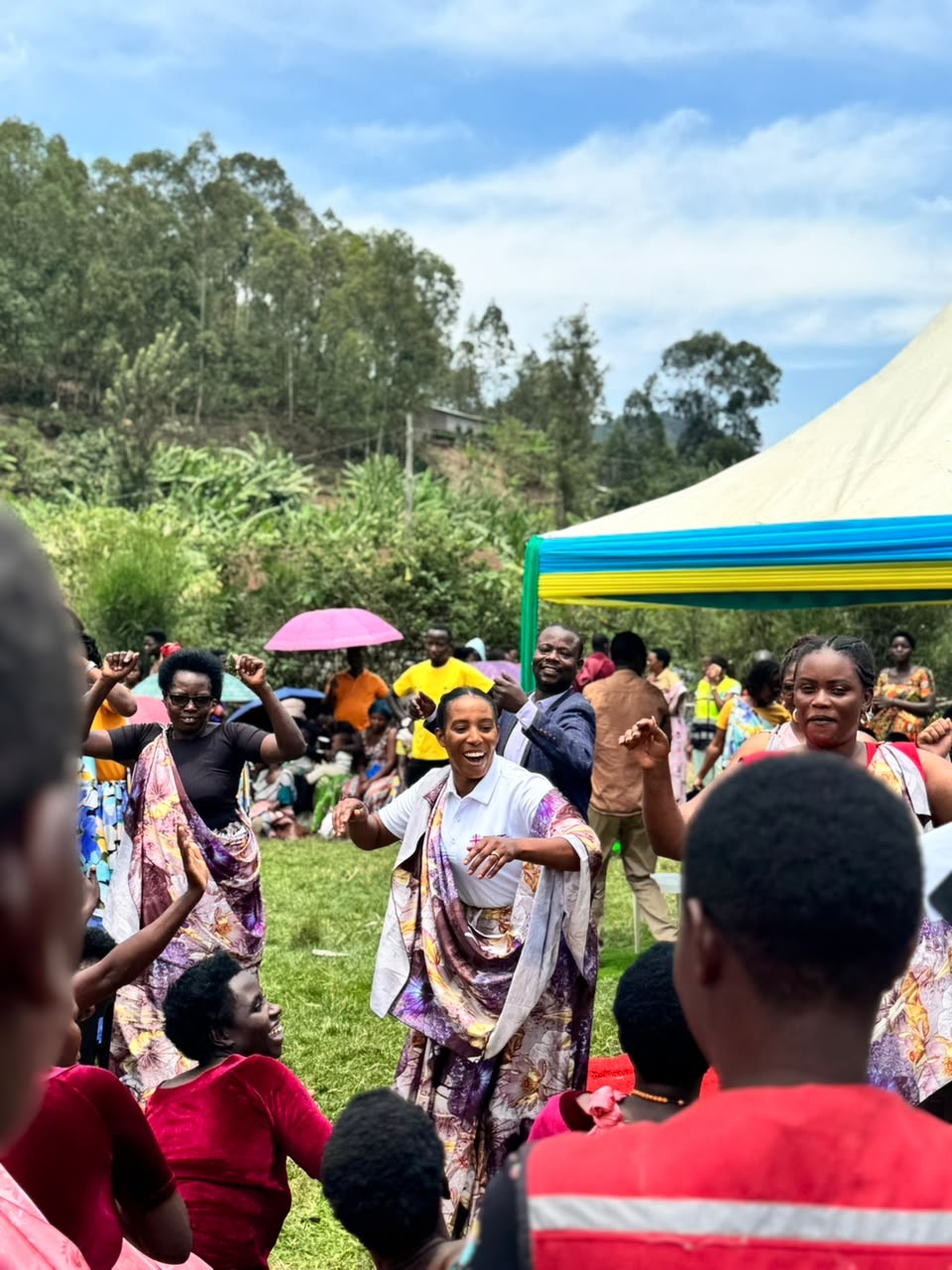
In Nyamasheke, Rwanda, we worked with the authorities of the Gihombo and Mahembe sectors and the parish priest of Kibingo to bring the community together around a clear message. Gender-based violence is unacceptable, whether it is physical, economic or rooted in abuse of power. Every woman has the right to live in safety and to know where to seek help.
We also honoured women role models. Supported by our project teams, they have developed their farms and launched income-generating activities. In doing so, they have gained financial independence and a respected place in their community. Their journeys show in concrete terms what economic autonomy can change, and they are a source of inspiration for the young mothers present.
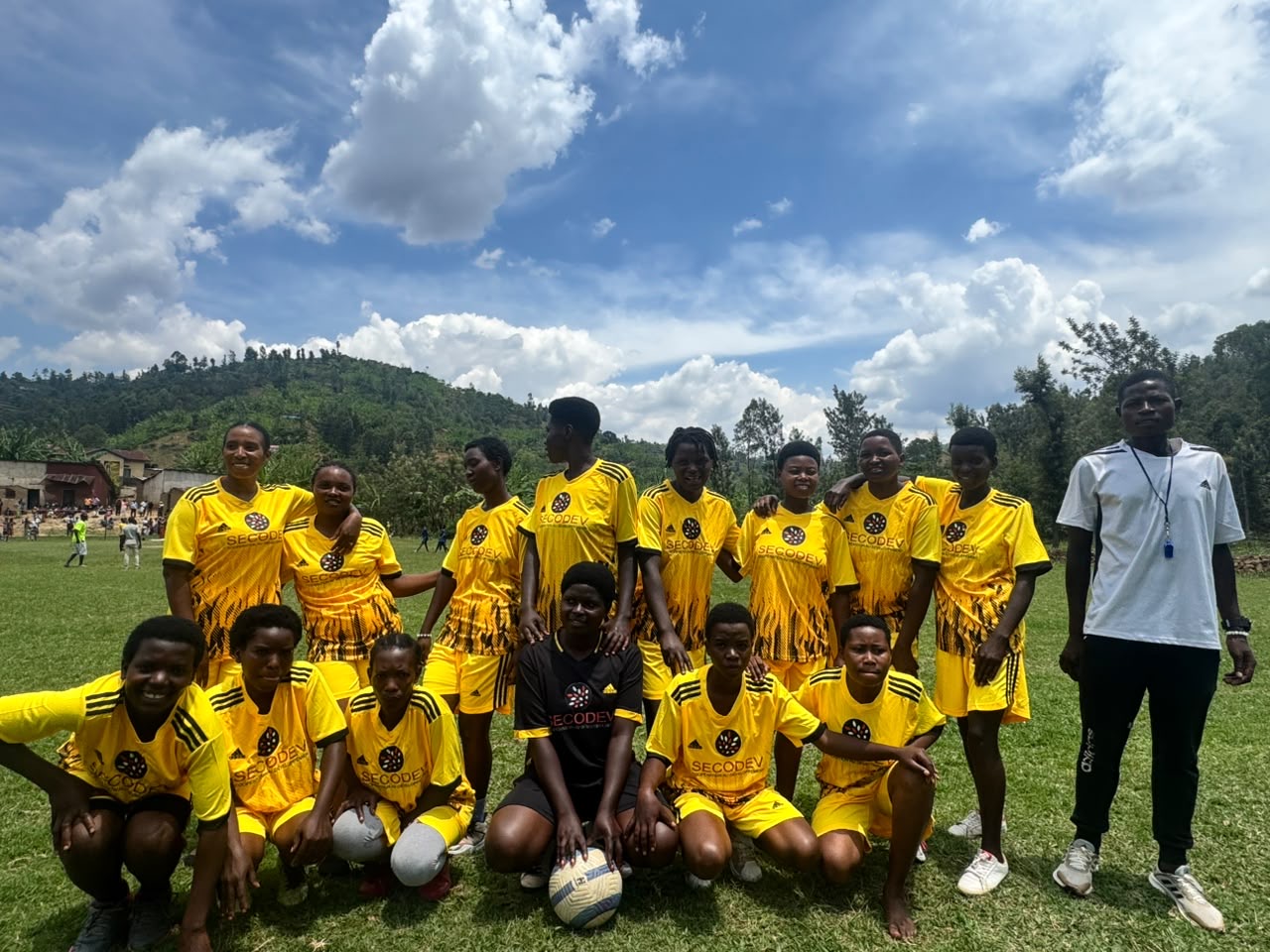
The day ended with a football match between the young single mothers of Nyamasheke and those of Rutsiro, which Nyamasheke won 3–0. Surrounded by families, neighbours and local authorities, the pitch became a place to talk openly about often taboo subjects, in a festive and supportive atmosphere.
For these women, whose daily lives are difficult, this moment of play and laughter matters. On the pitch, they gain self-confidence. They meet other women going through the same things and build bonds that last beyond the match. This network is precious, because isolation is precisely what makes them vulnerable. And in front of the whole community, they are no longer just ‘single mothers’: they are players, teammates, winners. Changing that perception is also a way of fighting violence.